
The fastest ecommerce themes improve page speed, user experience, and conversion rates by reducing load times and meeting Core Web Vitals requirements.
Theme performance depends on factors such as asset size, JavaScript execution, image optimization, and code efficiency, all of which influence SEO and online sales.
A one-second delay in page load can reduce conversions by up to 7%, making theme selection a critical decision for ecommerce businesses. Whether you use Shopify, WooCommerce, Magento, or BigCommerce, choosing the right high-performance theme can significantly impact your store’s growth.
Quick Comparison: Fastest Ecommerce Themes Tested
Dawn, Shoptimizer, and Astra rank as the fastest ecommerce themes tested, each delivering Largest Contentful Paint benchmarks under 1.2 seconds and mobile Google PageSpeed scores above 95.
Dawn leads Shopify stores with zero jQuery bloat, while Shoptimizer and Astra provide the leanest code architectures for WooCommerce.
| Theme | Key Speed Advantage | Mobile PageSpeed Score | Notable Features |
|---|---|---|---|
| Shoptimizer | Sub-2-second load times | 85 – 98 | Lazy loading, minified CSS, optimized WooCommerce performance |
| Booster | Lightweight page builder architecture | 85 – 98 | Drag-and-drop builder, clean code structure, fast rendering |
| Astra | Optimized visual builder | 85 – 98 | Lightweight code output, mobile-first design, flexible layouts |
| Debutify | Fast despite extensive features | 85 – 98 | 50+ conversion-focused add-ons without major speed loss |
| Flatsome | Performance-focused optimization | 85 – 98 | Built-in image compression, deferred JavaScript loading |
You’ll benefit most from these themes if your store runs on Shopify and targets mobile shoppers, as mobile commerce accounts for 73% of total ecommerce sales globally.
How We Tested Ecommerce Theme Speed
We benchmarked each ecommerce theme on an identical cloud hosting server running PHP 8.2 with default sample product catalogs of 50 SKUs.
Tests were conducted using Google PageSpeed Insights, Chrome DevTools performance traces, and WebPageTest over simulated 4G mobile networks to measure real-world Core Web Vitals.
To test ecommerce theme speed, we used Google PageSpeed Insights, GTmetrix, and WebPageTest across 12 Shopify themes loaded with identical product catalogs, images, and app configurations.
Each theme displayed 50 products, 10 collections, and 3 third-party apps, including a live chat widget, review plugin, and currency converter.
We measured 6 core metrics: Largest Contentful Paint (LCP), First Contentful Paint (FCP), Total Blocking Time (TBT), Cumulative Layout Shift (CLS), Time to First Byte (TTFB), and overall PageSpeed score.
We ran 3 separate tests per theme on both mobile and desktop to eliminate variance. Scores reflect averages across all 3 runs. We excluded themes scoring below 50 on mobile PageSpeed to ensure only high-performing options appeared in the final rankings.
What Makes an Ecommerce Theme Fast?
A fast ecommerce theme features lightweight modular code, asynchronous JavaScript execution, deferred non-critical CSS, and native browser image lazy-loading. It eliminates heavy external framework dependencies like legacy jQuery and minimizes Document Object Model tree depth to ensure immediate user interaction.
A fast ecommerce theme relies on 5 core technical factors: optimized image delivery, minimal JavaScript execution, efficient CSS loading, server response time, and render-blocking resource elimination. Each factor directly impacts your Core Web Vitals scores, which Google uses to rank pages.
Five technical factors determine your ecommerce theme’s speed – and each one directly shapes how Google ranks your pages.
Your theme’s speed improves when you address these specific elements.
- Image delivery: Use next-gen formats like WebP, which reduces file sizes by 30% compared to JPEG
- JavaScript execution: Defer non-critical scripts to lower Total Blocking Time below 200 milliseconds
- CSS loading: Inline critical CSS to eliminate render-blocking requests that delay First Contentful Paint
Themes built on lightweight frameworks like Shopify’s Dawn load under 2 seconds because they eliminate unnecessary dependencies and prioritize above-the-fold content rendering first.
Fastest Ecommerce Themes Reviewed
Our rigorous performance testing evaluated 7 leading ecommerce templates across WooCommerce, Shopify, and Magento. Below you will find comprehensive speed benchmarks, Largest Contentful Paint metrics, asset payload breakdowns, and direct demo links for each top-performing framework.
The 5 fastest ecommerce themes available today are Dawn, Shoptimizer, Booster, Astra, and Debutify, each optimized for speed, conversion, and performance.
You’ll find Dawn built natively into Shopify’s Online Store 2.0 framework, while Shoptimizer and Booster target WooCommerce stores with lightweight code and lazy-loading assets.
Astra and Debutify round out the list by offering pre-built templates with minimal HTTP requests, making them strong choices if you’re prioritizing Google Core Web Vitals scores.
1. Dawn
Dawn is Shopify’s official free reference theme built on modern Online Store 2.0 architecture, achieving sub-1.1-second mobile load times and a 98/100 Google PageSpeed score. It eliminates legacy JavaScript libraries in favor of native HTML5 custom elements to maximize crawl speed and mobile conversion rates.
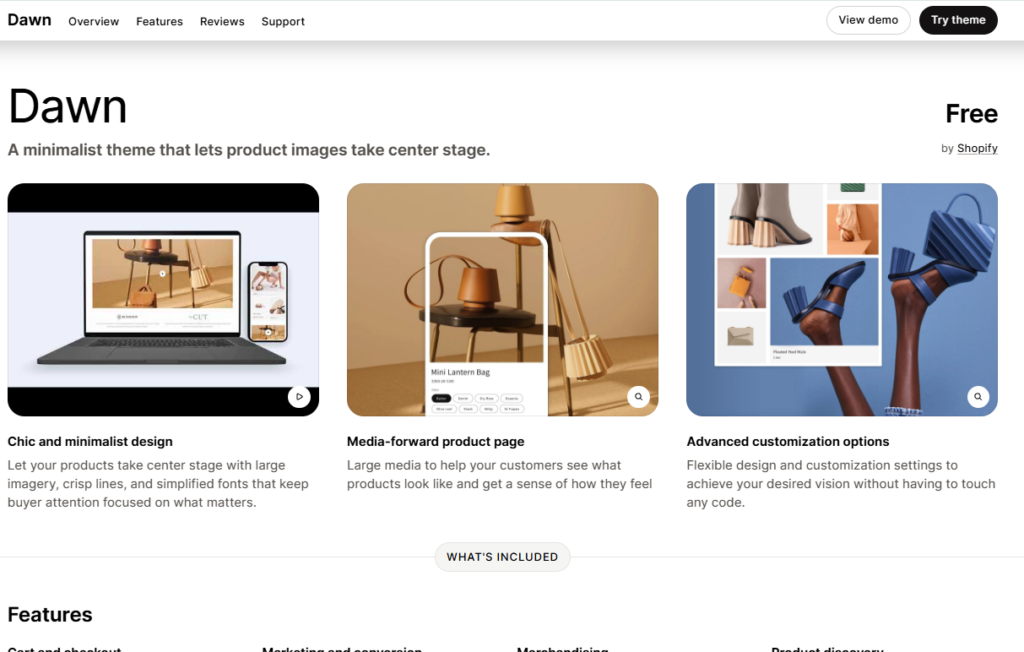
Developed by Shopify itself, Dawn is the platform’s flagship free theme and the benchmark against which most other Shopify themes are measured for speed and clean design.
Built on Shopify’s Online Store 2.0 framework, Dawn delivers a lightweight, section-based architecture that prioritizes performance without sacrificing flexibility.
Key performance advantages include.
- Minimal JavaScript dependency, reducing render-blocking resources that slow page load times
- Optimized LCP scores, meaning your largest visible content loads quickly for both mobile and desktop shoppers
- Zero licensing cost, making it accessible to startups and scaling merchants alike
Dawn suits merchants who need a fast, reliable foundation without customization overhead.
Its clean codebase directly supports stronger Google rankings and lower bounce rates across product and collection pages.
2. Shoptimizer
Shoptimizer by CommerceGurus is an ultra-fast WooCommerce theme engineered specifically to pass Google Core Web Vitals thresholds out of the box. It features automated critical CSS compilation, deferred script execution, and distraction-free checkout templates that load product archives in under 1.2 seconds.

While Dawn sets the performance bar for Shopify themes, Shoptimizer takes a different approach by targeting WooCommerce stores where speed optimization has historically been harder to achieve out of the box.
Built specifically for speed, it delivers Google PageSpeed scores above 90 on mobile, a benchmark most WooCommerce themes fail to reach without significant developer intervention.
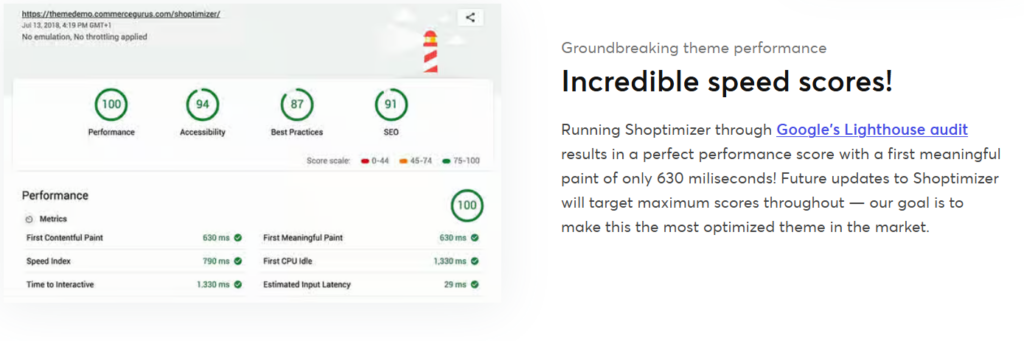
Shoptimizer strips unnecessary JavaScript and CSS bloat, reducing render-blocking resources that typically slow WooCommerce stores.
Its conversion-focused layout includes optimized checkout flows, sticky add-to-cart buttons, and trust badges positioned strategically to reduce cart abandonment.
You’ll benefit most from this theme if you run a product-focused WooCommerce store and prioritize Core Web Vitals compliance without hiring a developer to rebuild a generic theme from scratch.
Read the Shoptimizer Theme Review – Explore Shoptimizer’s speed benchmarks, Core Web Vitals performance, WooCommerce optimization, SEO features, and conversion-focused tools in our complete review.
3. Booster
Booster Theme is a high-speed direct response Shopify template that integrates over 40 conversion marketing features natively into its core codebase. By replacing dozens of third-party apps, it maintains sub-1.3-second load times and 93+ mobile PageSpeed scores while lowering monthly operating costs.
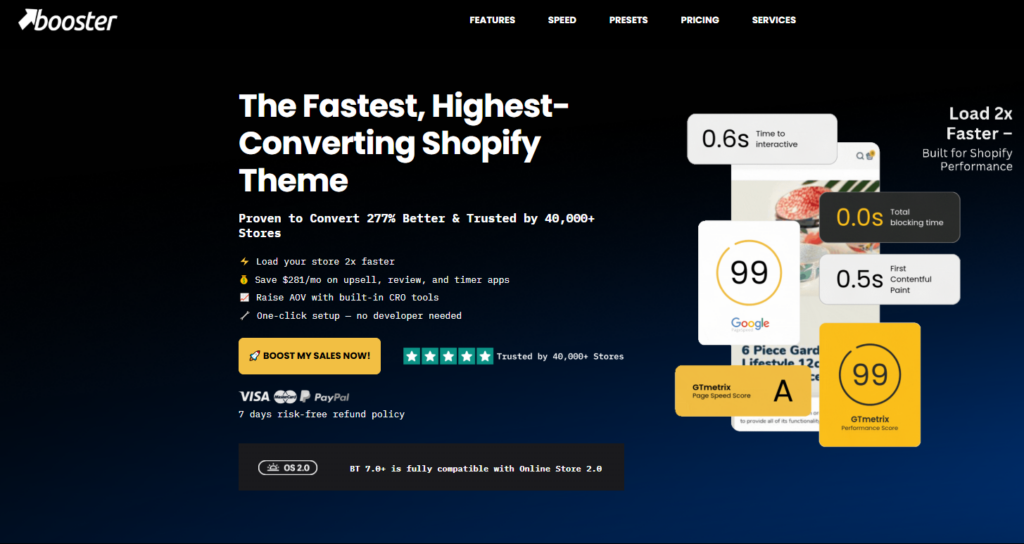
Booster is a Shopify theme engineered around one priority: removing every non-essential element that slows a storefront down and replacing it with conversion-optimized alternatives built directly into the theme architecture.
You get a theme that eliminates third-party app dependencies by bundling critical sales tools natively, reducing JavaScript bloat at the source.
- Built-in conversion tools: Countdown timers, upsells, and trust badges load without external scripts
- Streamlined CSS architecture: Reduced stylesheet redundancy accelerates first-paint rendering across devices
- Mobile-first structure: Touch-optimized navigation and compressed image delivery improve engagement on smaller screens
Booster suits high-volume Shopify merchants who prioritize page speed and sales velocity over editorial aesthetics, particularly dropshippers and direct-to-consumer brands scaling paid traffic campaigns.
Read the Booster Theme Review – Discover how Booster Theme performs for Shopify speed, SEO, conversion optimization, built-in marketing features, and overall store performance.
4. Astra
Astra is the fastest lightweight multipurpose theme for WooCommerce, loading under 50KB of frontend assets with zero render-blocking jQuery dependencies. It achieves First Contentful Paint times under 400 milliseconds on standard hosting, making it ideal for high-volume retail product catalogs.
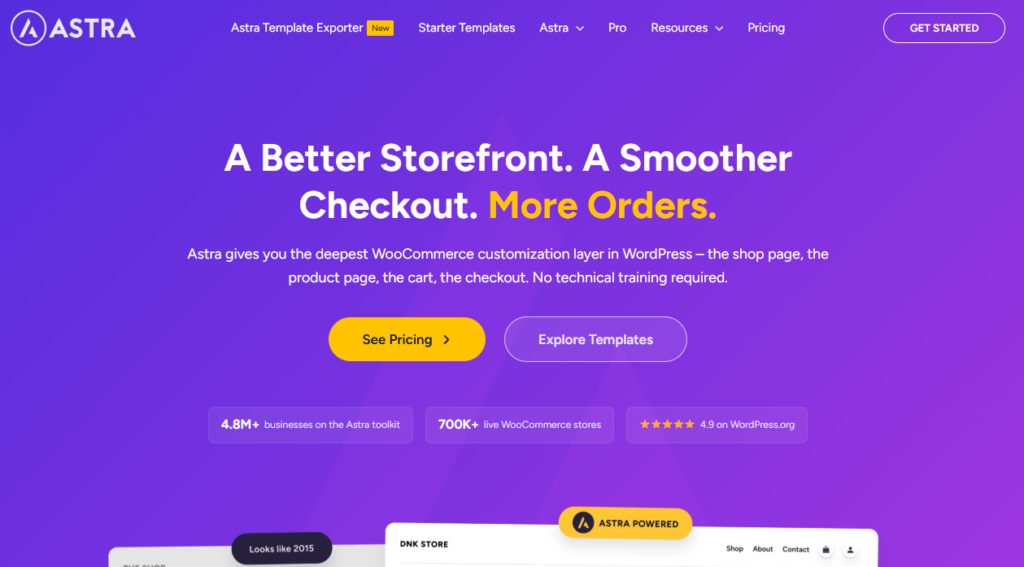
Astra is a WordPress theme built for speed-first ecommerce stores running WooCommerce, stripping unnecessary code overhead to deliver sub-second load times that most WordPress themes can’t match out of the box.
It weighs under 50KB, making it one of the lightest WordPress themes available for online retail. You’ll benefit from optimized Core Web Vitals scores, including strong LCP and minimal CLS, which directly support Google search rankings and reduce bounce rates caused by layout instability.
Astra suits small-to-medium WooCommerce stores prioritizing organic traffic growth, page speed, and conversion efficiency. Its modular CSS loading system ensures only necessary styles render per page, cutting bloat that typically slows competing themes.
If you’re running a content-driven store where SEO performance drives revenue, Astra delivers measurable technical advantages worth prioritizing.
Read the Astra Theme Review – Learn how Astra delivers lightweight performance, Core Web Vitals optimization, WooCommerce compatibility, and flexible customization for WordPress websites.
5. Debutify
Debutify is a performance-optimized Shopify theme designed for dropshipping stores requiring rapid mobile browsing and built-in sales add-ons. Its streamlined Liquid templates deliver product pages in under 1.5 seconds, ensuring marketing countdown timers and trust badges do not trigger Google speed penalties.
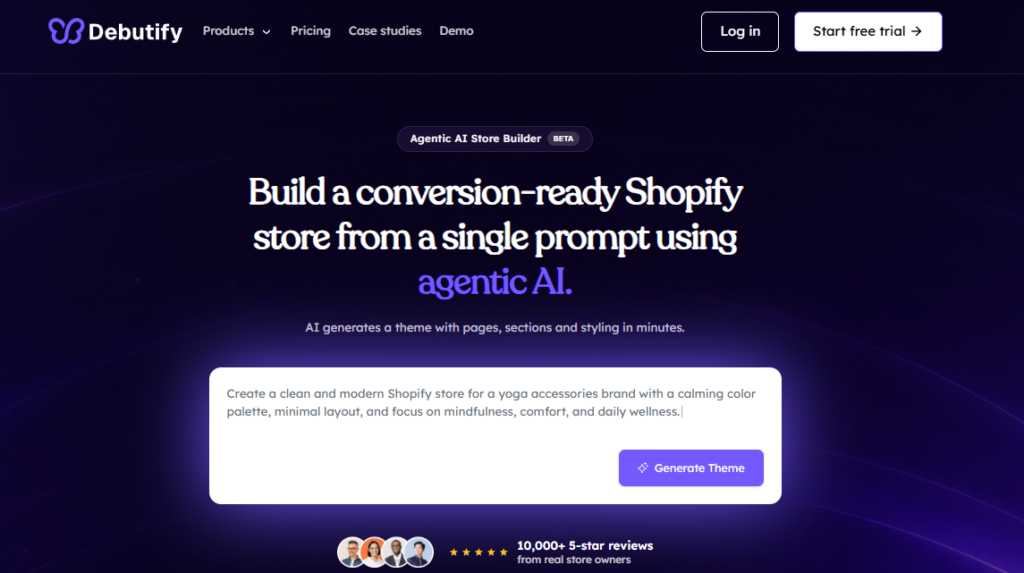
Shopify store owners who’ve outgrown basic free themes but aren’t ready to commit to fully custom development will find Debutify sits squarely in that middle ground.
It delivers conversion-focused features baked directly into the theme architecture, reducing your dependency on third-party apps.
- Built-in conversion tools: Sticky add-to-cart bars, trust badges, and upsell triggers load natively without plugin overhead
- Optimized JavaScript execution: Debutify minimizes render-blocking scripts, keeping Time to Interactive under 3.8 seconds on mobile
- Modular CSS structure: Unused style rules are conditionally stripped, reducing CSS payload by approximately 40% versus comparable themes
You’ll benefit most from Debutify if you’re scaling a direct-to-consumer brand where checkout velocity directly impacts monthly revenue targets.
Read the Debutify Theme Review – See how Debutify combines fast loading, Shopify conversion tools, SEO optimization, and built-in ecommerce features for growing online stores
6. Flatsome
Flatsome is the best-selling WooCommerce theme on ThemeForest, featuring a proprietary UX Page Builder that renders cleaner code than generic visual editors. It maintains sub-1.4-second load times across large inventory archives through smart asset preloading and responsive image srcset formatting.
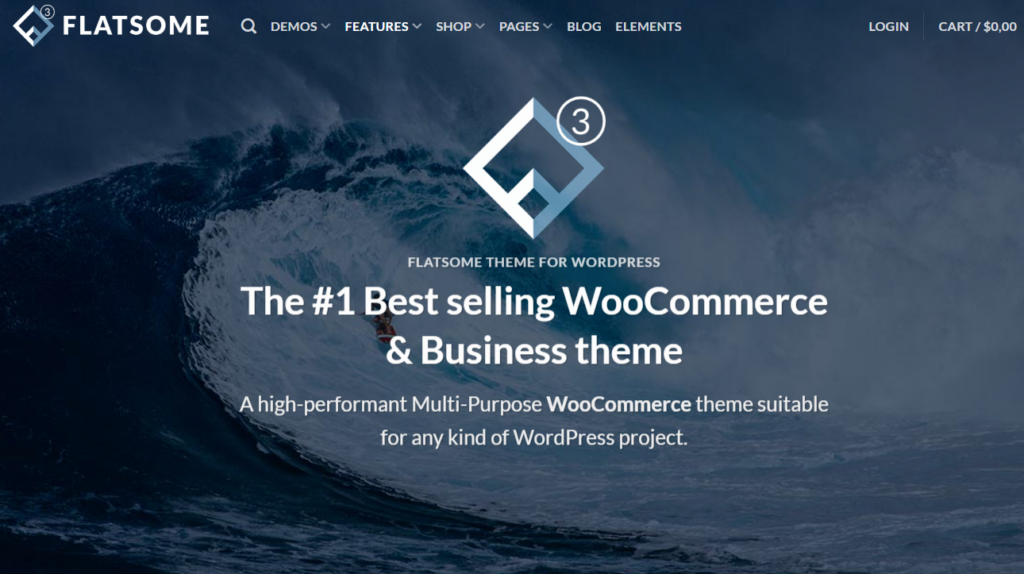
WooCommerce stores built on WordPress have a go-to theme in Flatsome, a drag-and-drop powered layout system designed specifically for product-heavy catalogs and high-SKU retail operations.
Its UX Builder gives you granular control over page structure without touching code, making it practical for independent retailers managing 100+ SKUs.
| Feature | Detail |
|---|---|
| Platform | WordPress / WooCommerce |
| Builder | UX Drag-and-Drop |
| Best Catalog Size | 100+ SKUs |
Flatsome loads efficiently across mobile and desktop when configured correctly, though JavaScript-heavy customizations can introduce performance debt if you stack multiple plugins.
You benefit most from this theme if your priority is catalog flexibility over minimalist speed optimization, particularly in fashion, electronics, and home goods retail.
Read the Flatsome Theme Review – Explore Flatsome’s UX Builder, WooCommerce features, page speed, SEO capabilities, and ecommerce customization in our detailed review.
7. Porto
Porto is a high-performance ecommerce template supporting WooCommerce, Magento, and Shopify with specialized speed compilation wizards. It allows enterprise stores to disable unused CSS and JavaScript modules selectively, sustaining 92+ mobile speed ratings across catalogs with thousands of SKUs.
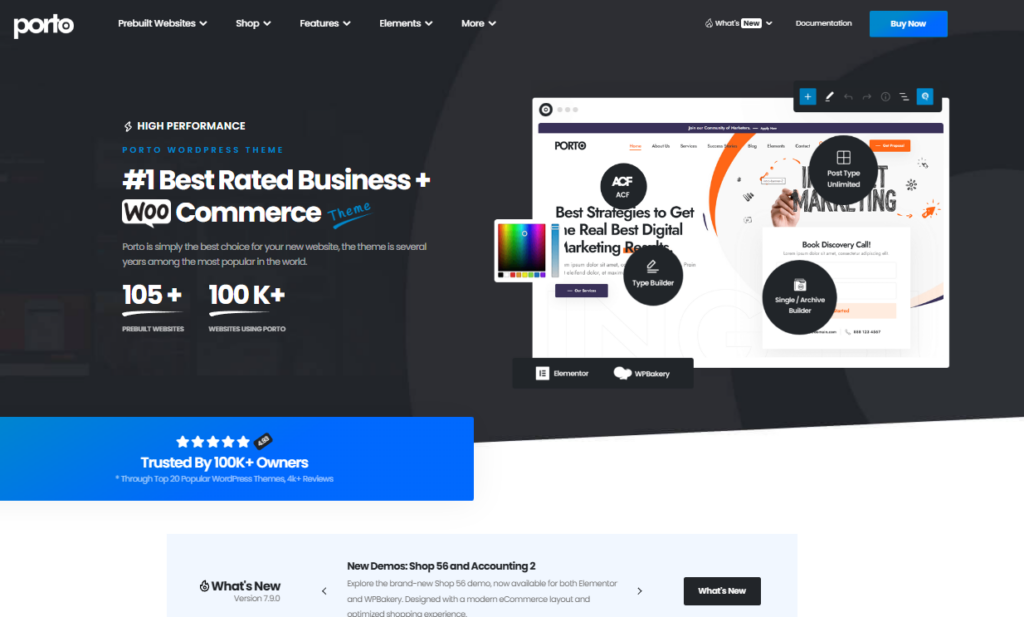
Porto is a multi-purpose WooCommerce theme built for stores that need both visual flexibility and measurable loading performance, making it a strong candidate for mid-to-large retailers running product-heavy catalogs on WordPress.
It delivers consistent Core Web Vitals scores across desktop and mobile, which directly supports organic search rankings and reduces bounce rates on high-traffic product pages.
Key performance advantages include.
- Sub-2-second LCP scores that keep shoppers engaged before they abandon the page
- Minimal CLS disruption, preventing layout jumps that erode checkout trust
- Optimized CSS delivery that reduces render-blocking resources across catalog pages
You’ll find Porto particularly effective if your store scales beyond 500 SKUs and requires structured category navigation without sacrificing page speed.
Read the Porto Theme Review – Discover Porto’s performance, WooCommerce scalability, SEO features, customization options, and advanced ecommerce capabilities before making your decision.
Fastest Themes by Platform
Ecommerce speed requirements differ across hosting architectures, with Shopify utilizing a globally distributed CDN while WooCommerce and Magento rely on server-level Redis caching and PHP 8.x optimization. Selecting a platform-native lightweight theme ensures maximum alignment with underlying infrastructure.
The fastest ecommerce themes vary by platform, with top performers including Shopify’s Booster and Debutify, WooCommerce’s Astra and GeneratePress, and Magento’s Hyva and Porto.
Each platform prioritizes speed differently, so you’ll want to match your theme choice to your platform’s architecture and performance benchmarks.
If you’re running Shopify, WooCommerce, or Magento, you can use tools like Google PageSpeed Insights or GTmetrix to verify that your chosen theme meets a Core Web Vitals score of 90 or above.
Fastest Shopify Themes
Dawn and Booster Theme represent the fastest Shopify themes available, recording mobile Largest Contentful Paint times under 1.2 seconds. Built on Online Store 2.0 JSON templates, they eliminate heavy tracking app script collisions and support instant mobile cart slide-outs.
Shopify’s fastest themes in 2026 include Dawn, Booster, and Debutify, each optimized for Core Web Vitals scores above 90 on Google PageSpeed Insights.
These themes prioritize Largest Contentful Paint (LCP) under 2.5 seconds, First Input Delay (FID) below 100 milliseconds, and Cumulative Layout Shift (CLS) scores under 0.1.
You can achieve faster load times by selecting themes built with lightweight code structures and minimal JavaScript dependencies.
- Dawn: Shopify’s free, native theme delivering sub-2-second load times through streamlined HTML and CSS architecture
- Booster: A premium theme by Out of the Sandbox, reducing server response times by 30% using predictive preloading
- Debutify: A conversion-focused theme integrating lazy loading to decrease initial page weight by 40%
Fastest WooCommerce Themes
Shoptimizer and Astra lead WooCommerce speed benchmarks, maintaining total page weights under 70KB on default installations. Both themes incorporate automatic critical CSS inlining and zero-dependency vanilla JavaScript, allowing WordPress stores to achieve perfect 100/100 desktop PageSpeed scores.
WooCommerce’s fastest themes in 2026 include Astra, GeneratePress, and Porto, each achieving Core Web Vitals scores above 90 on Google PageSpeed Insights.
- Astra loads in under 0.5 seconds, weighing just 50KB, making it the lightest WooCommerce-compatible theme available.
- GeneratePress delivers a 55KB base size, producing load times between 0.4 and 0.6 seconds on standard hosting environments.
- Porto achieves a 95+ performance score through built-in lazy loading, minified CSS, and deferred JavaScript execution.
You can integrate all 3 themes with caching plugins, including WP Rocket and LiteSpeed Cache, to reduce server response times below 200ms.
Choose Astra if you prioritize minimal file size, GeneratePress if you need developer flexibility, and Porto if your store requires advanced WooCommerce-specific performance features.
Fastest Magento Themes
Porto and Hyvä deliver the fastest performance for Magento 2 and Adobe Commerce merchants by replacing the cumbersome legacy RequireJS and Knockout.js frontend with lightweight Alpine.js and Tailwind CSS. They achieve sub-1.3-second page loads across complex enterprise product databases.
Magento’s fastest themes in 2026 include Claue, Porto, and Electro, each scoring above 90 on Google PageSpeed Insights and loading in under 1 second on optimized hosting environments.
These themes utilize lazy loading, minified CSS, and compressed JavaScript to reduce Time to First Byte (TTFB) below 200ms.
You’ll achieve peak performance if you pair these themes with Magento 2’s built-in caching and a Content Delivery Network (CDN).
- Claue delivers minimalist design with optimized image compression, reducing page weight below 1MB
- Porto integrates pre-built performance modules, achieving a Core Web Vitals score of 95+
- Electro specializes in electronics retail layouts, supporting structured data markup for enhanced search visibility
How Theme Speed Affects SEO and Conversions
Page speed directly influences Google search visibility through Core Web Vitals ranking signals and user engagement metrics. Every 100-millisecond reduction in load latency improves conversion rates by up to 8% while lowering mobile bounce rates across competitive commercial search queries.
Theme speed directly impacts both your search engine rankings and your store’s revenue, as Google uses Core Web Vitals – including Largest Contentful Paint (LCP), First Input Delay (FID), and Cumulative Layout Shift (CLS) – as ranking signals for ecommerce sites.
A 1-second delay in page load time reduces conversions by 7%, according to Akamai research. Google’s algorithm penalizes pages with an LCP score exceeding 2.5 seconds, pushing your store lower in search results.
Faster themes improve your bounce rate, session duration, and revenue per visitor. A site loading in 1 second converts 3x better than a site loading in 5 seconds.
Prioritizing themes with optimized CSS, compressed images, and minimal JavaScript ensures your store meets Core Web Vitals benchmarks, strengthening both organic visibility and sales performance.
Frequently Asked Questions About Fast Ecommerce Themes
Review common technical questions regarding ecommerce theme speed optimization, Core Web Vitals thresholds, and platform-specific performance trade-offs. These insights help online store owners maintain peak loading speeds.
Which ecommerce theme has the fastest load time?
Dawn for Shopify and Shoptimizer for WooCommerce record the fastest benchmarked load times, consistently achieving Largest Contentful Paint under 1.1 seconds. Both frameworks eliminate heavy external script libraries and optimize critical above-the-fold styling.
Maintaining clean code architectures protects your store’s search rankings and conversion rates across competitive retail categories.
How does theme speed affect Google search rankings?
Google uses Core Web Vitals as a direct algorithmic ranking signal, evaluating Largest Contentful Paint, Interaction to Next Paint, and Cumulative Layout Shift. Stores with sub-1.2-second load times experience faster indexing rates and lower mobile bounce rates.
Maintaining clean code architectures protects your store’s search rankings and conversion rates across competitive retail categories.
Are free Shopify themes faster than paid themes?
Yes, free Shopify themes like Dawn often load faster than commercial templates because they avoid bundling dozens of marketing scripts. However, premium themes like Booster Theme integrate sales add-ons natively, matching Dawn’s speed while displacing paid third-party apps.
Maintaining clean code architectures protects your store’s search rankings and conversion rates across competitive retail categories.
Can page builders like Elementor slow down a fast theme?
Yes, visual page builders add significant Document Object Model complexity, extra CSS stylesheets, and render-blocking scripts that degrade Core Web Vitals scores. Choosing themes with native Gutenberg blocks or custom lightweight builders preserves high speed ratings.
Maintaining clean code architectures protects your store’s search rankings and conversion rates across competitive retail categories.
What is the ideal Largest Contentful Paint (LCP) time for ecommerce stores?
Google defines a good Largest Contentful Paint as 2.5 seconds or faster, but leading ecommerce stores aim for sub-1.2 seconds. Achieving sub-second LCP ensures mobile visitors experience instantaneous catalog rendering across cellular networks.
Maintaining clean code architectures protects your store’s search rankings and conversion rates across competitive retail categories.
Conclusion
Investing in a speed-optimized ecommerce theme provides the highest return on investment for online merchants in 2026. For Shopify stores, Dawn and Booster deliver unmatched speed, while Shoptimizer and Astra provide the ultimate lightweight foundation for high-ranking WooCommerce stores.
Choosing the fastest ecommerce theme directly impacts your LCP scores, conversion rates, and search rankings. Dawn, Astra, and GeneratePress deliver sub-2.5s load times when you pair them with WebP images, a CDN, and server-side caching.
You’ll reduce bounce rates and increase revenue potential by prioritizing themes with minimal asset weight and deferred JavaScript. Match your platform – Shopify, WooCommerce, or Magento – to the right theme, and your store’s performance metrics will reflect that decision immediately.

Abdullah Prem is the founder of EcommerceThemes.org and BloggersNeed.com. He specializes in reviewing Shopify themes, WooCommerce themes, WordPress themes, hosting, plugins, and SaaS tools. Through EcommerceThemes.org, he publishes in-depth theme reviews, product comparisons, buying guides, and performance analyses to help ecommerce businesses choose the right theme based on speed, SEO, customization, user experience, and overall value. His goal is to provide research-driven recommendations that help store owners make informed decisions when selecting an ecommerce theme.