| Developer / Brand | Presidio |
| Sold On | Shopify Theme Store |
| Page Builder | Shopify Online Store 2.0 theme editor |
| Rating | ⭐ 4.6/5 (our review score) |
| Mobile Responsive | ✅ 100% Mobile & Tablet Ready |
🛠️ Theme Specifications
Palo Alto is Presidio’s $420 fashion theme with five presets, Palo Alto, Dynamo, Skylight, Phenomena and Pluma, and 313 merchant reviews. We tested version 9.2.1, focusing on shop the look, upselling and the promotional tools.
Its sweet spot is growing clothing and lifestyle brands that want easy setup, flexible layouts and conversion features to take them from first sale toward scale.
Palo Alto Shopify Theme Facts and Figures
At $420 the Palo Alto Shopify theme bundles 5 presets, Palo Alto, Dynamo, Skylight, Phenomena and Pluma, with shop the look, product upselling, quick buy, restock alerts, hotspots on images and pre-order. One payment of $420 buys it, backed by 313 reviews at 94% positive.
| Spec | Palo Alto |
|---|---|
| Price | $420 (pay on publish) |
| Developer | Presidio |
| Included styles | 5: Palo Alto, Dynamo, Skylight, Phenomena, Pluma |
| Shopify rating | 94% positive from 313 reviews |
| Ideal store | Growing fashion and lifestyle brands |
| Docs | Palo Alto help docs |
| Last update | 9.2.1, October 28, 2026 |
| Demo | Open the Palo Alto demo |
How Palo Alto Performs: Features and Trade-offs
Palo Alto’s strengths are conversion features and steady updates. Shop the look, upselling and quick buy are built in, and version 9.2.1 shipped in October 2026, which shows a theme still being actively maintained. The trade-off is a $420 price at the top of our range.
Shop the Look and Upselling
Presidio highlights conversion features in Palo Alto, including shop the look, product upselling and quick buy. Shop the look tags each piece in a styled shot, so a buyer can add the whole outfit at once, which grows basket size on campaign images.
Dynamo, Skylight, Phenomena and Pluma apply these sales tools to five different fashion and lifestyle moods.
Promotional Features for Retention
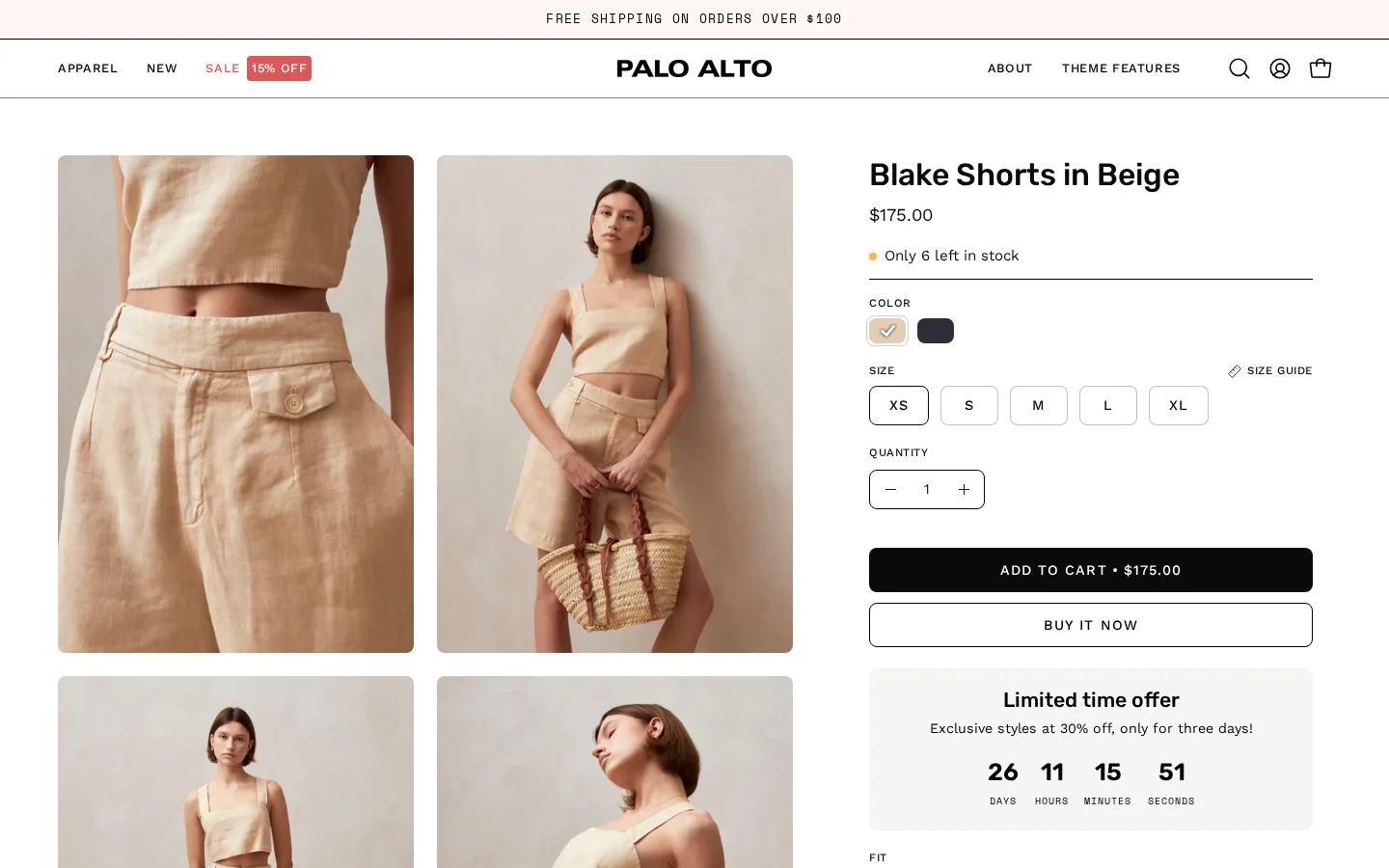
Palo Alto includes impactful promotional features designed to keep customers engaged and returning. Countdown timers, promo popups, back-in-stock alerts and in-menu promos give fashion brands several ways to bring shoppers back for new drops, restocks, seasonal campaigns and limited-time sales events.
Easy Setup and Flexible Layouts
Presidio says Palo Alto offers easy setup, flexible layouts and quality options designed to take stores from their first sale to their first million. For growing brands, that means one theme that can scale instead of a forced redesign after early success.
Palo Alto 9.2.1 on Mobile
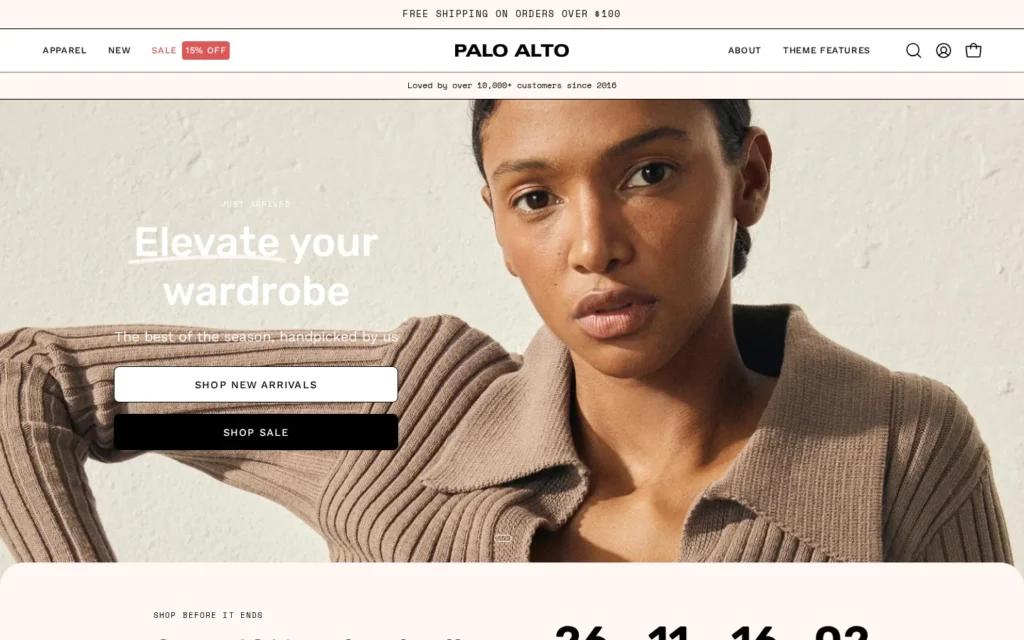
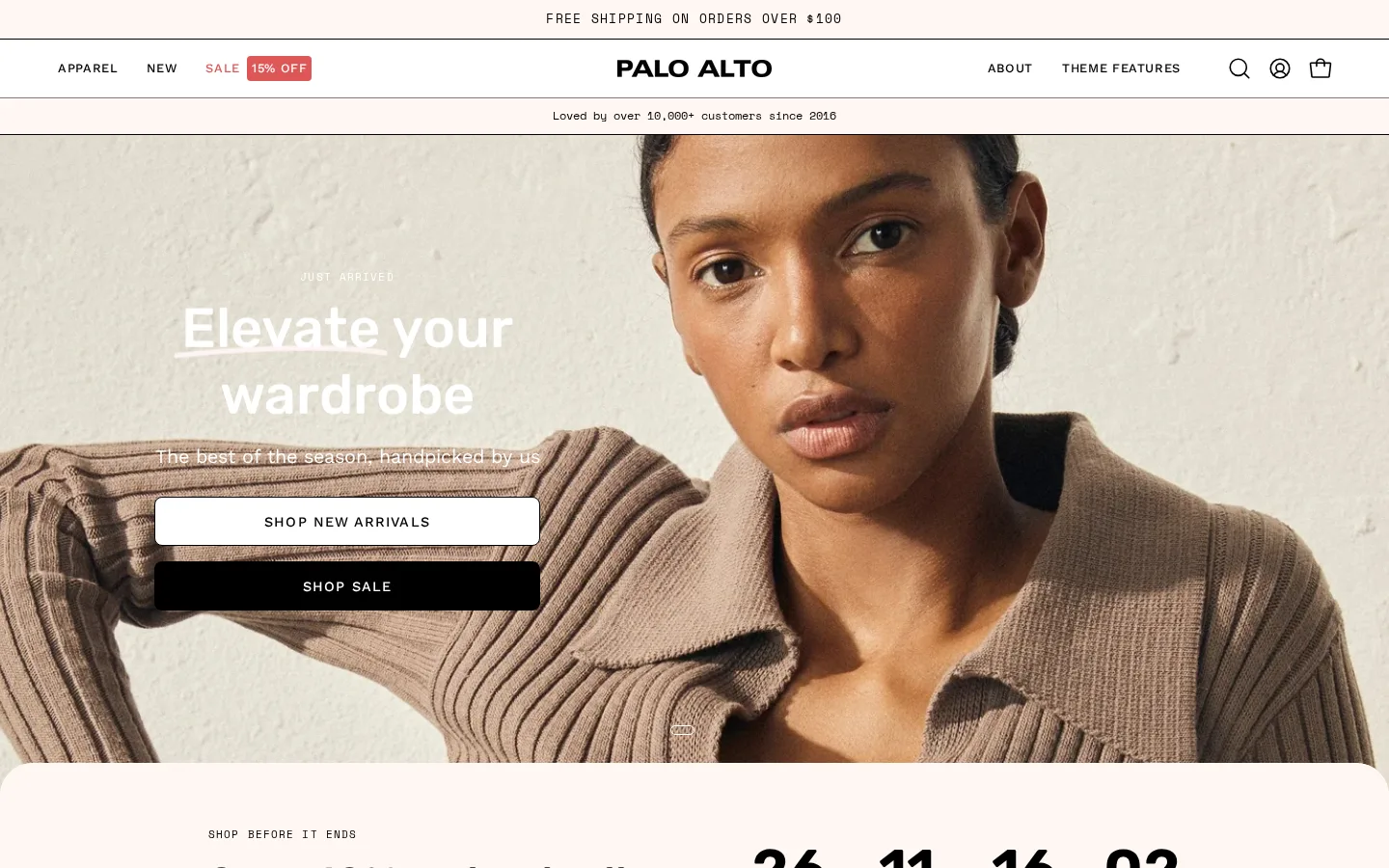
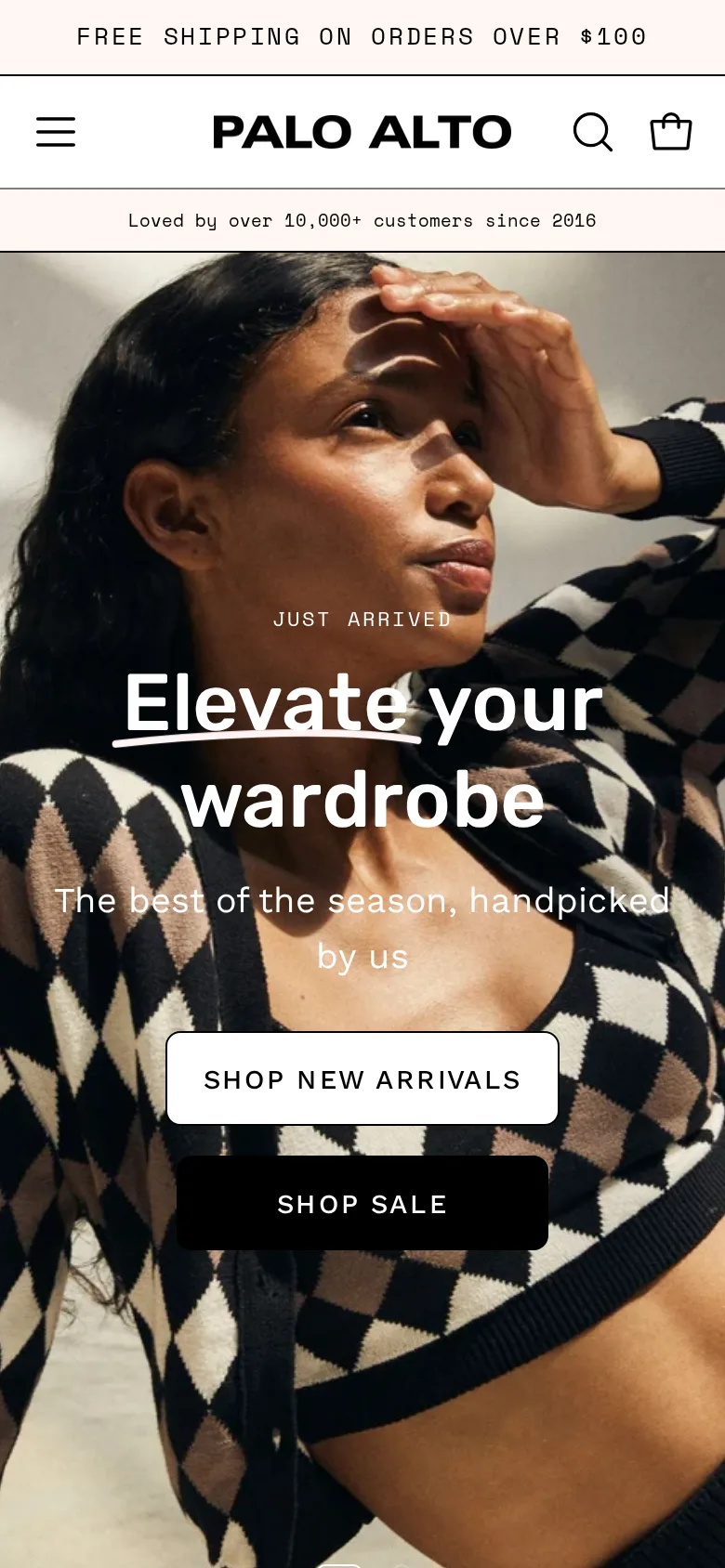
Palo Alto keeps its sticky cart, slide-out cart, quick buy and swatch filters on mobile, so fashion shoppers can browse and add items quickly on phones. Most fashion traffic is mobile. Our phone capture showed a tidy header and bold, image-led hero.
What We Like About Palo Alto
- 94% positive from 313 reviews
- Shop the look and product upselling
- Back-in-stock alerts and pre-order
- Updated to 9.2.1 in October 2026
- Pairs with the Presidio+ app
Palo Alto Drawbacks
- $420 is among the priciest here
- Many features take time to configure
- No gift wrapping listed
Is Palo Alto Worth $420?
Palo Alto is priced at $420 with no renewals. Averaged out, that is $35 monthly in year one and $17.50 over two years. Broadcast and Release cost the same, and Impulse costs $80 more. Shop the look, upselling and back-in-stock alerts are included, which would otherwise mean several monthly apps.
| Shopify theme | Price | Developer |
|---|---|---|
| Palo Alto | $420 | Presidio |
| Broadcast | $420 | Presidio |
| Impulse | $500 | Archetype Themes |
| Release | $420 | DigiFist |
Version 9.2.1 arrived on October 28, 2026, free for existing owners. Each store needs its own $420 license.
Who Should Use the Palo Alto Theme?
Palo Alto fits growing clothing and lifestyle brands that want shop the look, upsells and strong promotions in one actively updated theme. Tiny shops, plus brands that need gift wrap or wholesale features, ought to price out lighter themes before spending $420.
Palo Alto for Fashion Labels
Fashion labels get the most from Palo Alto. Shop the look sells full outfits from lifestyle images, image hotspots tag each piece, and swatch filters help shoppers find their color, which together raise order value and make styled campaigns directly shoppable.
Palo Alto for Scaling DTC Brands
Scaling direct-to-consumer brands benefit from Palo Alto’s growth focus. Back-in-stock alerts recover demand for sold-out items, pre-order captures sales before restocks, and frequent updates mean the theme keeps pace with Shopify as your store, catalog and monthly traffic keep growing over time.
Presidio fans who run many promotions should read our Broadcast Shopify theme review, because Broadcast comes from the same developer at $420 and adds 1-click add to cart and 30+ sections, while Palo Alto leans on shop the look and imagery.
Setting Up the Palo Alto Demo in Your Store
Compare all five preset demos, from Palo Alto to Pluma, with your campaign photos. Then set up shop the look on one styled image, add back-in-stock alerts to a sold-out product and test quick buy on a phone. You pay the $420 on publish.
- Open the Palo Alto listing on Shopify.
- Compare the five preset demos with your brand.
- Add Palo Alto 9.2.1 to your library.
- Turn on back-in-stock alerts and product tabs.
- Set up shop the look on one campaign image and test it.
- Publish, paying $420.
Common Mistakes With Palo Alto
Palo Alto is easy to under-use. Owners skip shop the look setup, upload low-quality lifestyle images that the hotspots cannot rescue, and switch on every promotion at once. Each wastes the theme’s strongest features or clutters pages, so set up one shoppable image first.
- Unused shop the look: tag products in lifestyle images.
- Weak imagery: use high-resolution campaign photos.
- Promo overload: keep a single headline offer live per week.
- No stock alerts: enable back-in-stock for best sellers.
Palo Alto vs Broadcast, Impulse and Release
Broadcast, Impulse and Release are the strongest alternatives to Palo Alto. Broadcast costs $420 for promotion-heavy stores, Impulse costs $500 for drop-driven fashion, and Release costs $420 for bold, fast brands. For growing fashion brands that sell through imagery, Palo Alto remains our pick.
| Theme | Best for | Price | Rating |
|---|---|---|---|
| Palo Alto | Growing fashion and lifestyle brands | $420 | 94% |
| Broadcast | Promotion-heavy accessories | $420 | 94% |
| Impulse | Drop-driven fashion | $500 | 94% |
| Release | Bold, fast fashion brands | $420 | 95% |
Palo Alto vs Broadcast
At $420, Broadcast by Presidio carries a 94% approval score across 285 store owner reviews. Over thirty sections ship with it, along with fast carting and add-on offers. Broadcast is a better buy than Palo Alto if you sell accessories and rely heavily on frequent, campaign-driven promotions.
Our Broadcast theme analysis compares both Presidio themes, helpful for brands deciding between Palo Alto’s shop the look strength and Broadcast’s deeper set of sales and promotion tools.
Palo Alto vs Impulse
Impulse from Archetype Themes sells for $500, and 94% of its 1,304 merchant reviews are positive. Labels that launch capsules every month suit it. Impulse makes more sense than Palo Alto if you want the largest review base and drop-focused design.
Read our Impulse Shopify theme review to see how its drop-friendly layouts compare, a strong option for streetwear and fashion brands willing to pay $80 more than Palo Alto.
Palo Alto vs Release
DigiFist prices Release at $420; merchants have left 118 reviews, 95% of them positive. It promises bold, lightning-fast impact with 30+ sections and quick view. Lean toward Release rather than Palo Alto if you want a bolder look and a stronger accessibility focus overall.
Our Release theme guide covers its five presets and performance focus, a good fit for brands that want a striking design more than Palo Alto’s shop the look tools.
Palo Alto Theme Review: Bottom Line
Palo Alto takes 4.6 out of 5 from our team, an actively updated Shopify theme for growing fashion brands, with shop the look, upselling, back-in-stock alerts and a 94% positive rating for $420. Budget stores should compare cheaper themes before paying this much.
✅ Pros
- 94% positive from 313 reviews
- Shop the look and product upselling
- Back-in-stock alerts and pre-order
- Updated to 9.2.1 in October 2026
- Pairs with the Presidio+ app
❌ Cons
- $420 is among the priciest here
- Many features take time to configure
- No gift wrapping listed
📦 Theme Resources & Setup Information
Frequently Asked Questions
What does Palo Alto cost per store?
It is $420 per store, with later versions included.
When was Palo Alto last updated?
Presidio released version 9.2.1 on October 28, 2026.
Which styles come with Palo Alto?
Five: Palo Alto, Dynamo, Skylight, Phenomena and Pluma. All share the same sales tools.
Is a custom contact form built into Palo Alto?
Yes. A custom contact form is included, along with a stock counter and infinite scroll.
How do I preview Palo Alto?
Pluma, Dynamo and the other presets all have demos. In the free trial, tag one of your own campaign images.
Where can I find Palo Alto help guides?
At palo-alto.presidiocreative.com, linked from the listing.
Palo Alto vs Broadcast: which is the better buy?
Palo Alto is better for fashion brands that want shop the look and image-led design. Broadcast suits promotion-heavy accessory stores. Both cost $420 from Presidio.
Does Palo Alto have shop the look?
Yes. Presidio lists shop the look, product upselling and quick buy as core Palo Alto features, along with image hotspots and back-in-stock alerts.

Abdullah Prem is the founder of EcommerceThemes.org and BloggersNeed.com. He specializes in reviewing Shopify themes, WooCommerce themes, WordPress themes, hosting, plugins, and SaaS tools. Through EcommerceThemes.org, he publishes in-depth theme reviews, product comparisons, buying guides, and performance analyses to help ecommerce businesses choose the right theme based on speed, SEO, customization, user experience, and overall value. His goal is to provide research-driven recommendations that help store owners make informed decisions when selecting an ecommerce theme.