| Developer / Brand | RoarTheme |
| Sold On | Shopify Theme Store |
| Page Builder | Shopify Online Store 2.0 theme editor |
| Rating | ⭐ 4.6/5 (our review score) |
| Mobile Responsive | ✅ 100% Mobile & Tablet Ready |
🛠️ Theme Specifications
Concept is RoarTheme’s $400 mobile-first theme, now on version 6.1.0 with two presets, Concept and Inova, and 673 merchant reviews. We tested how close its phone experience gets to a shopping app.
Best matched to mobile-first stores, especially electronics and lifestyle brands, that want swipe carousels and an app-like shopping experience on phones.
What You Get With the Concept Shopify Theme
For $400, the Concept Shopify theme (6.1.0) ships 2 presets, Concept and Inova, with carousel swipes, quick order lists, quantity pricing, pre-order, back-in-stock alerts, age verification and a sticky cart. Its $400 price sits beside a 99% score from 673 reviews.
| Item | Concept |
|---|---|
| Price | $400 once, free updates |
| Developer | RoarTheme |
| Presets | 2: Concept, Inova |
| Shopify rating | 99% positive from 673 reviews |
| Built for | Mobile-first electronics and lifestyle stores |
| Docs | Concept help docs |
| Current release | 6.1.0, October 23, 2026 |
| Demo | Concept preset demo |
Concept Features Worth Paying For
Concept earns its $400 on phones. Carousel swipes and a popup closing gesture make mobile shopping feel like a native app, and merchants rate it 99% positive across 673 reviews. The drawback is choice: you only get two presets, which is thin for a theme at this price.
App-Like Mobile Shopping
Concept uses carousel swipes and a popup closing feature to create a mobile shopping experience like a native app. Most Shopify traffic now arrives on phones, so gestures shoppers already know from apps reduce friction and keep them browsing longer.
Inova, the second preset, applies the same mobile behavior with a different visual style.
Customizable Built-In Sections
RoarTheme gives Concept highly customizable built-in sections, so you can build a store that fits your needs without installing extra apps or custom code. Promo tiles, press coverage, in-menu promos and lookbooks cover most merchandising jobs a growing store needs from day one.
Wholesale-Ready Extras
Concept includes a quick order list, quantity pricing, pre-order and back-in-stock alerts. These features are uncommon in mobile-first themes and help stores that sell accessories in bulk or launch limited products, without adding and paying for separate apps for each job.
Concept Mobile Experience and the Inova Demo
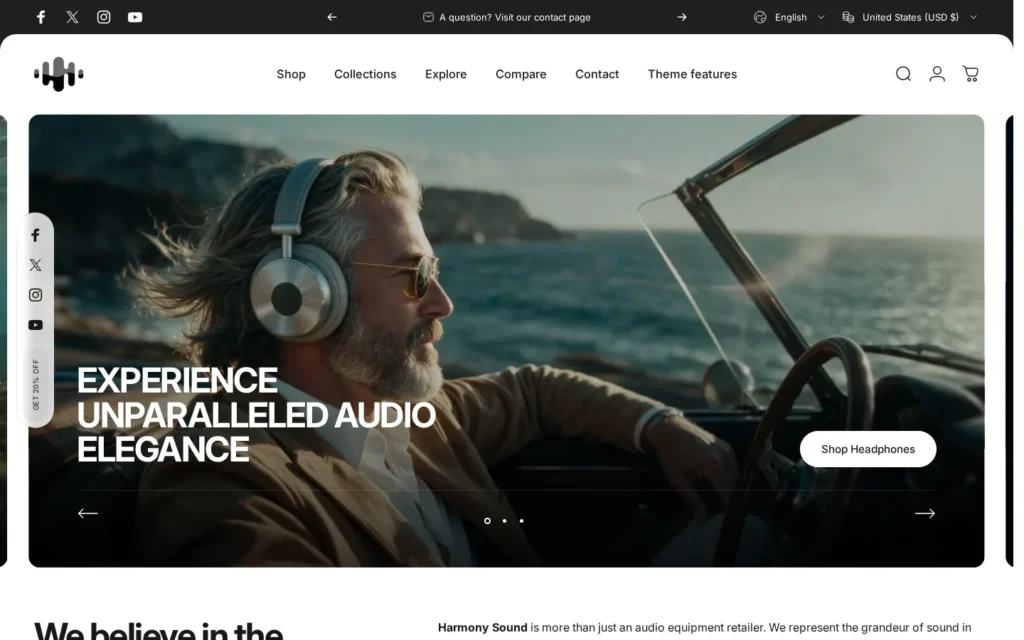
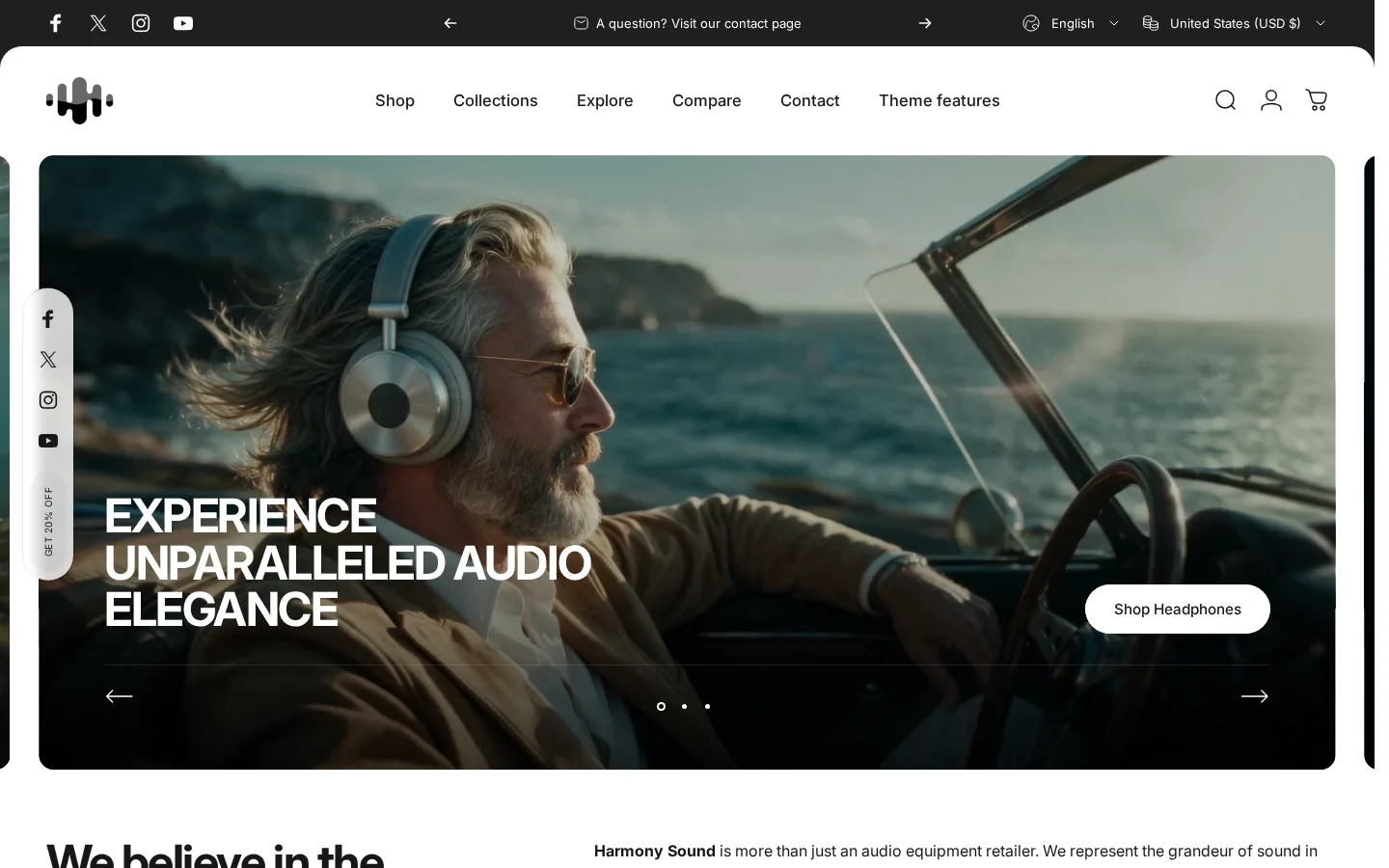
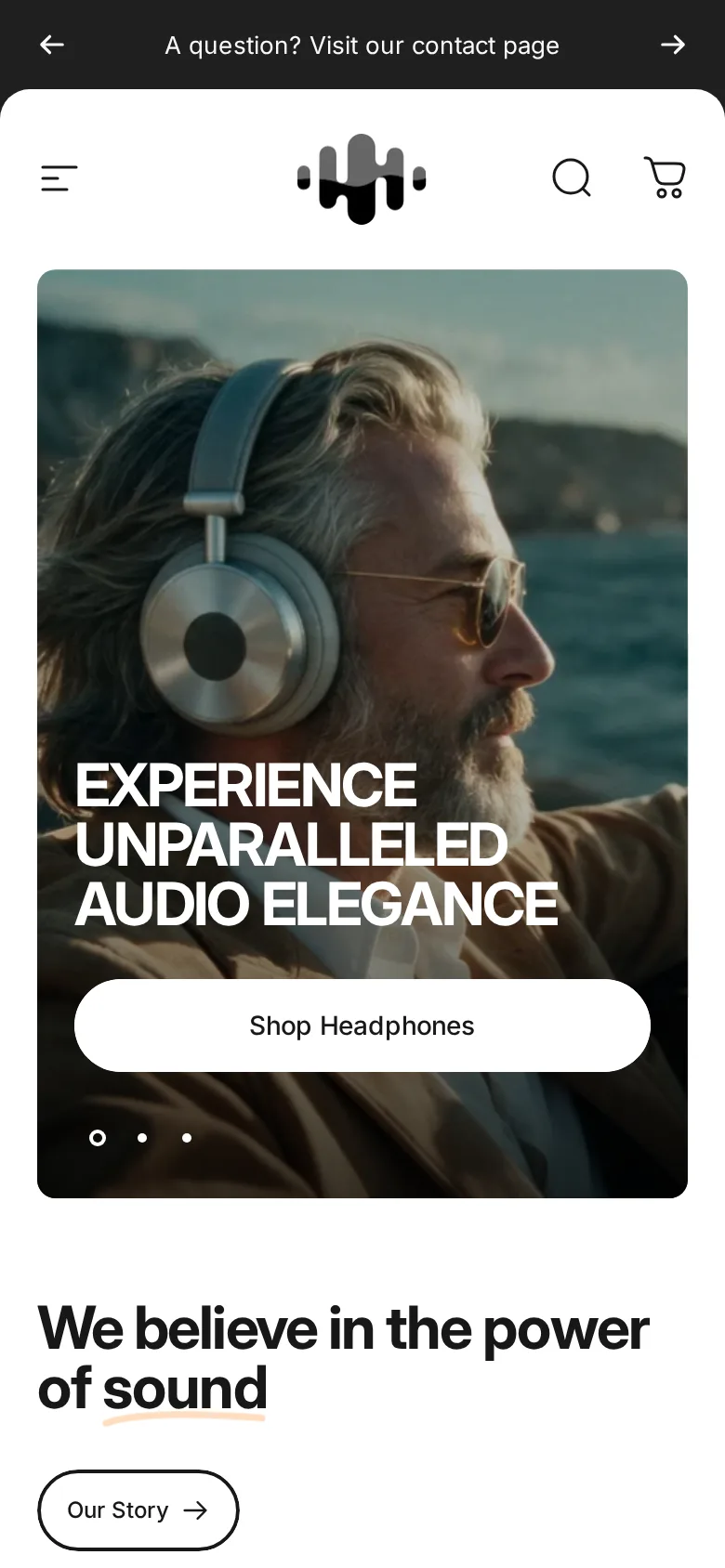
Concept is built mobile-first, with carousel swipes, popup closing, a sticky cart and quick buy designed for phones. This is the theme’s main strength, not an afterthought. Our mobile screenshot shows a compact header and hero that felt close to an app.
Where Concept Wins
- 99% positive from 673 reviews
- App-like mobile carousels and gestures
- Quick order list and quantity pricing
- Pre-order and back-in-stock alerts
- Frequent RoarTheme updates
What to Watch With Concept
- Only 2 presets
- $400 is at the upper end
- Desktop design is less distinctive than mobile
Concept Theme Price Breakdown
Concept costs $400 once, or about $33.33 a month in its first year and $16.67 a month over two years. Prestige, Pebble and Hyper sit at the same price, but Concept is the one that adds quantity pricing and pre-order alongside its app-style mobile design.
| Theme | Price | Developer |
|---|---|---|
| Concept | $400 | RoarTheme |
| Enterprise | $420 | Clean Canvas |
| Monk | $300 | Slash Themes |
| Hyper | $400 | FoxEcom |
Free updates come with the license, including 6.1.0 from October 23, 2026. Each extra store needs its own $400 license.
Who Should Use the Concept Theme?
Concept fits mobile-first stores in electronics, gadgets and lifestyle that get most traffic from phones and social ads. Brands wanting many preset styles, luxury editorial design or a cheaper entry price should compare other themes before paying $400 for Concept.
Concept for Electronics Stores
Electronics and gadget stores suit Concept well. Shoppers swipe through product carousels like an app, quick order lists help with accessories, and pre-order supports launches of new devices, which keeps early demand captured before new stock actually arrives in your warehouse.
Concept for Social-Driven Brands
Brands that sell through TikTok, Instagram and paid social benefit from Concept’s mobile-first design. Most visitors arrive on phones from short videos, and app-like gestures reduce bounce, so more of your paid traffic turns into longer browsing sessions and completed, paid orders.
Stores that like Concept’s mobile focus but want vendor and video features should read our Monk Shopify theme review, since Monk costs $100 less and adds shoppable video and multi-vendor tools for gadget stores that resell several brands.
Try Concept Free: Demo and Install Guide
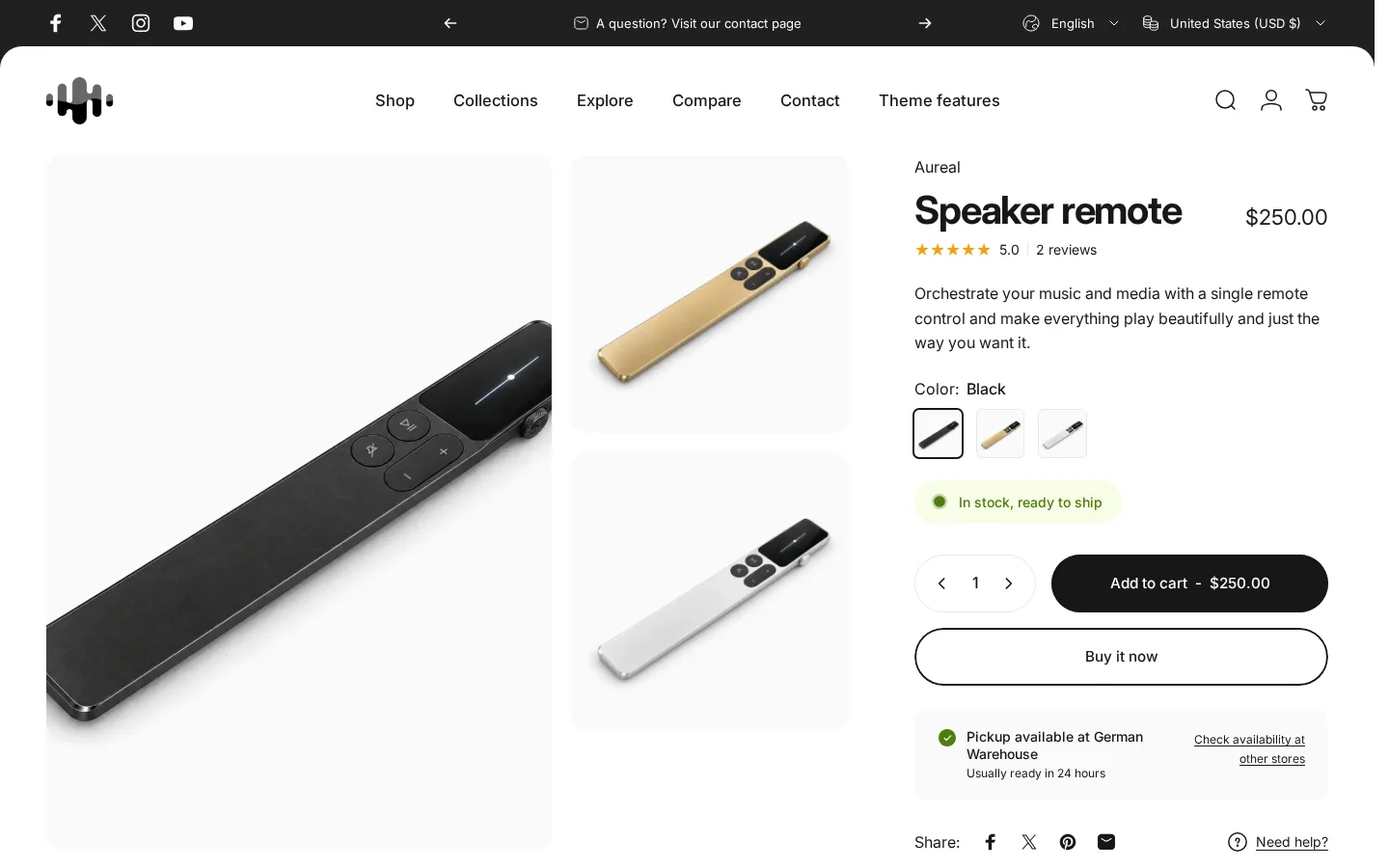
Open the Inova demo on your phone before anything else, since mobile is where Concept stands apart. Swipe through the product carousels, dismiss a popup, then load a product like the demo’s Speaker Remote with variants. RoarTheme bills the $400 only when you publish.
- Open the Concept listing on your phone and try both preset demos.
- Install Concept or Inova and leave it unpublished.
- Load a few products and set up carousel sections on the homepage.
- Test quick order list and pre-order on a sample product.
- Review every page on a real phone, then publish and pay $400.
Avoid These Concept Errors
Concept’s mistakes usually come from treating it like a desktop theme. Owners design on a laptop, stuff carousels with a dozen slides, and leave popup settings at their defaults. Each one blunts the app-like feel that justifies the $400 price, so make every change on a real phone first.
- Desktop-only design: preview every section on mobile.
- Carousel overload: keep carousels to six to eight items.
- Aggressive popups: delay popups and allow easy closing.
- Missing alerts: enable back-in-stock for popular items.
Concept vs Enterprise, Monk and Hyper
Enterprise, Monk and Hyper are the alternatives we would weigh against Concept. Enterprise costs $420 for large, fast catalogs, Monk costs $300 for multi-vendor video stores, and Hyper costs $400 for B2B growth. For stores that want app-like shopping on phones, Concept is still the best choice.
| Theme | Best for | Price | Rating |
|---|---|---|---|
| Concept | Mobile-first electronics and lifestyle stores | $400 | 99% |
| Enterprise | Large, speed-focused catalogs | $420 | 90% |
| Monk | Multi-vendor video stores | $300 | 100% |
| Hyper | B2B and wholesale growth | $400 | 99% |
Concept vs Enterprise
Enterprise from Clean Canvas sells for $420, and 90% of its 113 merchant reviews are positive. Clean Canvas built it for raw speed, offering three presets. Enterprise is a better buy than Concept if you carry thousands of SKUs and need deep navigation.
Our Enterprise theme review explains its speed and catalog features, which suit large electronics retailers more than Concept’s app-like design for mid-size, mobile-heavy stores.
Concept vs Monk
At $300, Monk by Slash Themes carries a 100% approval score across 27 store owner reviews. It adds shoppable video, multi-vendor support and a promo mega menu. Go with Monk instead of Concept if you resell many brands and want to save $100.
Read our Monk multi-vendor theme guide to compare its video tools with Concept’s mobile carousels, helpful for gadget stores that rely on product demos to sell.
Concept vs Hyper
Hyper from FoxEcom sells for $400, and 99% of its 523 merchant reviews are positive. Wholesale buyers get tiered prices, bulk carts and currency choice. Hyper is a better buy than Concept if wholesale buyers matter more to you than an app-like mobile shopping feel.
Our Hyper wholesale theme review covers its B2B pricing and bulk tools, a deeper option than Concept’s quick order list for brands that sell heavily to trade accounts.
Concept: Final Thoughts
Concept rates 4.6 out of 5 in our review, a strong Shopify theme for mobile-first stores, offering app-like carousels, quick order lists, pre-order and a 99% positive rating for $400. Brands that want many preset styles to choose from should compare other themes first.
✅ Pros
- 99% positive from 673 reviews
- App-like mobile carousels and gestures
- Quick order list and quantity pricing
- Pre-order and back-in-stock alerts
- Frequent RoarTheme updates
❌ Cons
- Only 2 presets
- $400 is at the upper end
- Desktop design is less distinctive than mobile
📦 Theme Resources & Setup Information
Frequently Asked Questions
Is Concept a one-time purchase?
Yes. Concept costs $400 once per store, and RoarTheme's updates are free after that.
Who supports Concept?
RoarTheme, which also makes Be Yours. Concept 6.1.0 was released on October 23, 2026.
Which styles come with Concept?
Two presets: Concept and Inova. Both share the same app-like mobile features and sections.
Does Concept include a custom contact form?
Yes, a customizable contact form is built in, so you can add fields without a form app.
Can I try the Concept demo before buying?
Yes. Both presets have live demos, and Try theme lets you test Concept in your store before you pay.
Does Concept have setup docs?
Yes. RoarTheme publishes Concept guides on roartheme.co covering sections and settings.
Should I pick Concept or Enterprise?
Concept is better for mobile-first, mid-size stores at $400. Enterprise costs $420 and suits large catalogs that need speed and deep navigation more than app-like gestures.
Is Concept a good Shopify theme for mobile?
Yes. Concept is built mobile-first with carousel swipes and popup closing that feel like a native app. Merchants rate it 99% positive from 673 reviews.

Abdullah Prem is the founder of EcommerceThemes.org and BloggersNeed.com. He specializes in reviewing Shopify themes, WooCommerce themes, WordPress themes, hosting, plugins, and SaaS tools. Through EcommerceThemes.org, he publishes in-depth theme reviews, product comparisons, buying guides, and performance analyses to help ecommerce businesses choose the right theme based on speed, SEO, customization, user experience, and overall value. His goal is to provide research-driven recommendations that help store owners make informed decisions when selecting an ecommerce theme.