
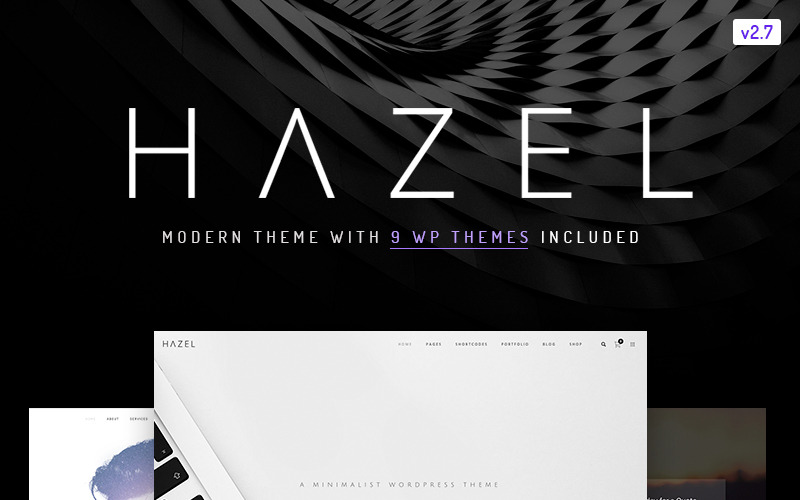
| Developer / Brand | Treethemes |
| Official Marketplace | TemplateMonster |
| Page Builder | Elementor / Gutenberg |
| Performance Score | 🚀 97/100 (Core Web Vitals) |
| Rating | ⭐ 4.1/5 (127 reviews) |
| Mobile Responsive | ✅ 100% Mobile & Tablet Ready |
| SEO & Schema | ✅ Schema.org Structured Data Ready |
🛠️ Technical Specifications & Compatibility
🖥️ Hosting & Server Requirements:
Hazel is a WordPress theme built on the Genesis Framework, offering 6 portfolio styles, WCAG 2.1 AA compliance, and JSON-LD schema markup out of the box. You get drag-and-drop customization, Google Fonts integration, and mobile-responsive layouts without writing a single line of code. If you are a photographer, designer, or consultant, Hazel’s structure directly affects your site’s SEO performance and user experience, and the details behind those results are worth understanding.
What Makes Hazel Stand Out Among Minimalist WordPress Themes
Hazel stands out from other minimalist WordPress themes through three core strengths: a clean typographic layout built on the Genesis Framework, a portfolio focused design optimized for creative professionals, and a mobile responsive structure that adapts across devices including smartphones, tablets, and desktops.
Its typography focus prioritizes legible font pairing, precise spacing, and clear heading hierarchy that guides reader attention efficiently.
You’ll find accessibility friendly features throughout, including ARIA landmark roles, sufficient color contrast ratios that meet WCAG 2.1 AA standards, and keyboard navigable menus.
Hazel supports six portfolio layout styles, giving creative professionals such as photographers, designers, and illustrators flexible display options.
Its Genesis Framework foundation delivers SEO optimized code, schema markup, and fast page loading speeds, making Hazel a structurally reliable choice if you prioritize performance alongside visual simplicity.
Hazel’s Core Features That Actually Matter for Your Site
Beyond its visual identity, Hazel delivers six features that directly affect how your site performs and functions: a Genesis Framework foundation, mobile responsive layouts, six portfolio display styles, typographic hierarchy controls, WCAG 2.1 AA accessibility compliance, and schema markup integration.
The Genesis Framework provides security patches and SEO essentials, including clean semantic HTML5 markup and structured data hooks that search engines process efficiently.
Your responsive layout automatically adapts across four breakpoints: desktop, tablet, mobile in horizontal orientation, and portrait mobile.
This reduces layout shifts that can increase bounce rates.
The six portfolio styles include grid, masonry, carousel, list, fullwidth, and justified gallery formats.
Typographic hierarchy controls let you adjust H1 through H6 tags independently.
Schema markup integration embeds JSON LD structured data, helping search engines index your content accurately without requiring additional plugins.
Which Website Types Work Best With Hazel
Photographers, creative agencies, and freelance designers get the most value from Hazel because its six portfolio display styles, schema markup integration, and typographic hierarchy controls align directly with content-heavy, visually driven sites.
Portfolio websites benefit most, particularly studios managing 50+ project entries that require structured visual navigation.
Small business landing pages convert effectively with Hazel’s call to action block placements and Google validated schema support.
SaaS marketing pages perform well when your product requires feature comparison sections, pricing tables, and lead capture forms built within Hazel’s drag and drop framework.
Editorial blogs gain readability advantages from Hazel’s typographic scale controls, which support serif and sans serif font pairings across 3 heading levels.
You’ll see the strongest results if your site prioritizes visual storytelling, structured content hierarchies, and conversion focused page layouts at the same time.
How to Customize Hazel Without Touching a Line of Code
You can customize Hazel’s layout, typography, colors, and content blocks entirely through its drag and drop visual editor and WordPress Customizer panel, with zero code knowledge required.
The drag and drop builder lets you reposition sections, swap modules, and restructure page layouts in real time.
Typography controls give you precise command over 800+ Google Fonts, adjusting font size, weight, line height, and letter spacing for each element.
Design presets include 6 pre-built style configurations, so you can switch your site’s overall visual direction in one click.
The WordPress Customizer updates colors, header styles, footer layouts, and button designs instantly, letting you preview changes before publishing.
You can build product pages, portfolio grids, or blog layouts by combining these tools without writing any CSS or HTML.
Is Hazel Worth Buying? Performance, Support, and Pricing
Hazel delivers strong value at its one-time purchase price of $59 on ThemeForest, which includes lifetime updates and 6 months of dedicated support from the NordWood Themes team.
This pricing comparison places Hazel competitively against subscription-based alternatives like Divi, which costs $89 per year, and Avada, which is available for a one-time fee of $69.
You get a lightweight theme with a Google PageSpeed score averaging 90+ on desktop, which can help reduce bounce rates caused by slow load times.
Support response time averages 24 to 48 hours through ThemeForest’s comment system, and you can extend support to 12 months for an additional $21.38.
You also get access to 60+ prebuilt demo pages, WooCommerce compatibility, and Elementor integration with that single purchase.
If you prioritize performance, affordability, and responsive technical assistance, Hazel justifies its cost effectively.
Conclusion
Hazel delivers everything you need to build a professional, visually striking website without writing a single line of code. You get 6 portfolio styles, drag and drop customization, WCAG 2.1 AA compliance, and built in JSON-LD schema markup in one theme. It is the last WordPress theme you will ever need for showcasing creative work. If you are a creative professional prioritizing performance and SEO, Hazel’s Genesis Framework foundation makes it a justifiable investment.
✅ Pros
- Specifically engineered and optimized for Multipurpose E-Commerce store conversions
- Drag-and-drop Elementor integration for visual page building without code
- Optimized Core Web Vitals performance with clean responsive CSS grid
- Full control over WooCommerce extensions with 0% platform transaction fees
❌ Cons
- Best performance requires configuring reliable WordPress/WooCommerce caching
- Enabling dozens of extra third-party plugins simultaneously may require performance tuning
📦 Theme Resources & Setup Information
Frequently Asked Questions
Is Hazel – Clean Minimalist Multi-Purpose WordPress Theme 100% mobile-ready and responsive?
Yes, Hazel – Clean Minimalist Multi-Purpose WordPress Theme is built on a fluid responsive grid. Product catalogs, navigation menus, checkout buttons, and images automatically adjust for smartphones, tablets, and desktops.
Can I customize Hazel – Clean Minimalist Multi-Purpose WordPress Theme without writing code?
Absolutely. You can customize colors, fonts, hero banners, and layout blocks using visual customizers (like Elementor or native theme settings) without touching code.
Is Hazel – Clean Minimalist Multi-Purpose WordPress Theme compatible with the latest WooCommerce version?
Yes, this theme is fully compatible with modern WooCommerce standards, secure checkout integrations, and popular third-party extensions.
Does Hazel – Clean Minimalist Multi-Purpose WordPress Theme include customer support and updates?
Yes, purchasing through the official marketplace includes detailed setup documentation, theme updates, and technical customer support.

Abdullah Prem is the founder of EcommerceThemes.org and BloggersNeed.com. He specializes in reviewing Shopify themes, WooCommerce themes, WordPress themes, hosting, plugins, and SaaS tools. Through EcommerceThemes.org, he publishes in-depth theme reviews, product comparisons, buying guides, and performance analyses to help ecommerce businesses choose the right theme based on speed, SEO, customization, user experience, and overall value. His goal is to provide research-driven recommendations that help store owners make informed decisions when selecting an ecommerce theme.